























Artificial intelligence (AI) is an emerging technology that enables computers and machines to simulate human learning, comprehension, and problem solving. Even though it has many uses, as it evolves, there are more concerns being raised in the AI industry regarding its environmental impacts.
AI’s foundations began long before modern computers existed: it has been around since the 1950s, growing out of early work in mathematics, logic, computer science, and psychology through gradual improvements. Back in the 1800s, mathematicians created formal logic systems that showed how reasoning could follow clear rules. Entering the 20th century, scientists began asking whether machines could simulate human thought, with one major influence being British mathematician Alan Turing. In 1950, he published a paper asking, “Can machines think?”, and proposed the Turing Test, a way to measure whether a machine could behave intelligently like a human, which helped legitimize AI as a serious scientific goal. Yet its popularity soared in 2023, with new developments allowing for famous AI-powered portraits flooding museums worldwide. Today, AI is used globally and has a bright future in developing countries: Thailand has become one of the first in Asia to get the Sora app, and Malaysia launched Ryt Bank, their first AI-powered bank.
Educationally, AI has become integrated in many curriculums throughout the nation. Platforms use AI to create interactive quizzes and games, and institutions such as the Alpha Austin in Texas are privately powered by AI through personalized one-to-one connection. Students may utilize AI as their most trustworthy and reliable tutor for their upcoming school assignments and tests, while teachers may regard it as their dependable image-generating and lesson-planning tool. However, outside of that, AI is used in everyday life in ways one may not expect—recommendation algorithms on streaming platforms, navigation apps, facial recognition, virtual assistants, and even as tools that help doctors diagnose diseases. In all industries, it seems that a consensus is continuously being reached and pushed—that AI is the future of technology.
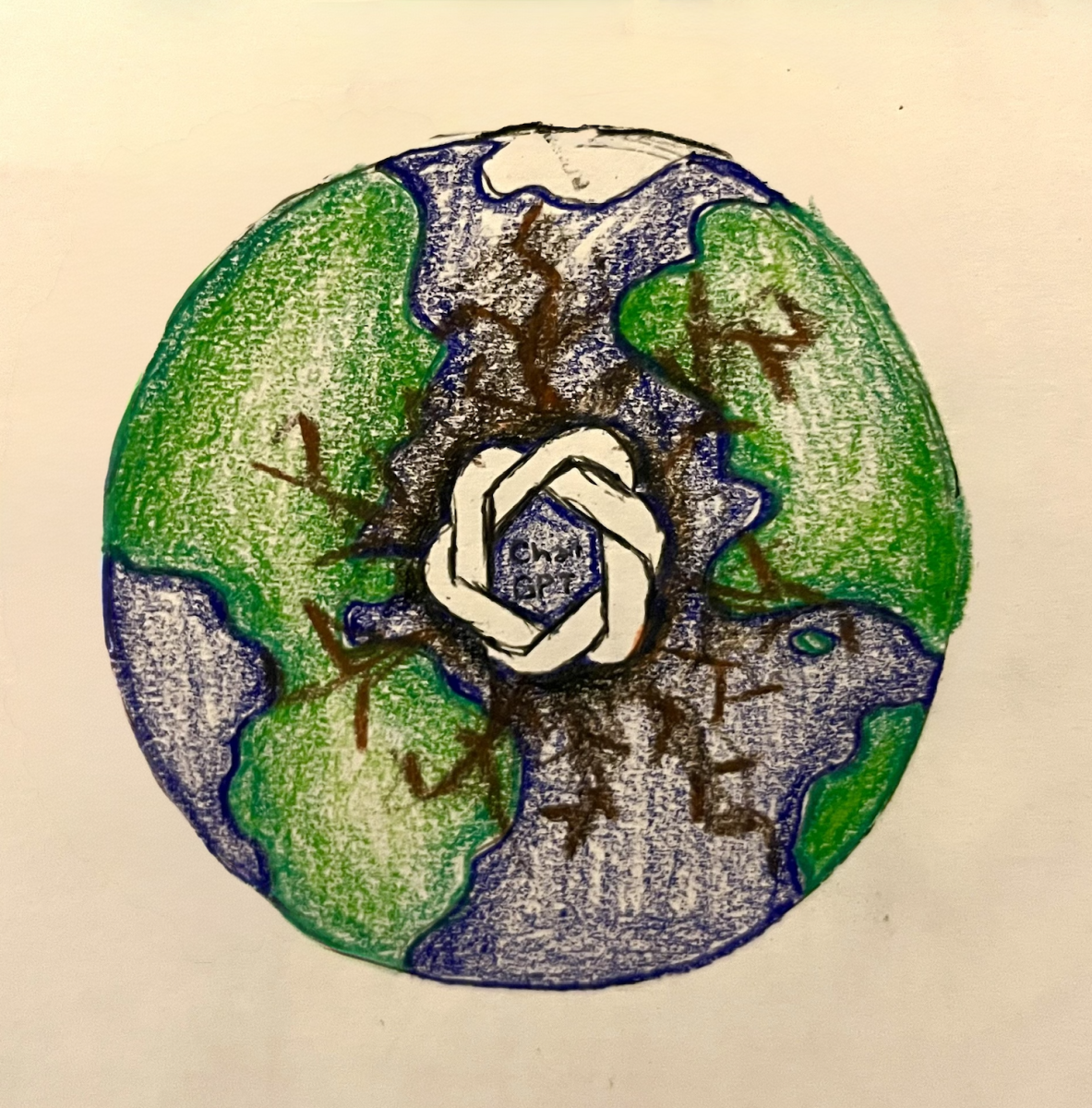
While AI can be incredibly useful, its rapid growth has raised concerns about its potentially invasive foundations, damage to cognitive thinking patterns caused by overreliance, and even environmental impact. A major environmental concern is energy use—AI systems, especially large models, require enormous amounts of computing power. Training these systems happens in data centers filled with powerful servers that run nonstop, which consume large amounts of electricity, much of which comes from fossil fuels. As a result, AI can contribute to increased carbon emissions and climate change. Yet the biggest environmental concern with AI is water consumption. Data centers generate a lot of heat, so they often use water-based cooling systems to prevent overheating. In the article “Data Centers and Water Consumption” on the Environmental and Energy Institute website (eesi.org), researchers reported, “Large data centers can consume up to five million gallons per day, equivalent to the water use of a town populated by 10,000 to 50,000 people, and developers are increasingly tapping into freshwater resources to quench the thirst of data centers, which is putting nearby communities at risk.” Offering another perspective, as posted on the Washington Post website (washingtonpost.com) in an article entitled “A Bottle of Water Per Email: the Hidden Environmental Costs of Using AI Chatbots”, scientists at the University of California, Riverside have reported each 100-word AI prompt is estimated to use roughly one bottle of water. The TechCrunch website (techcrunch.com) also claims that this is super concerning since ChatGPT reportedly receives 2.5 billion prompts from global users every day, and each essay a student generates can easily exceed 1,000 words. AI also contributes to electronic waste. The hardware needed to run AI through servers, graphics processing units (GPUs), and storage devices become outdated quickly. Disposing of this equipment can harm the environment if it is not recycled properly since electronics contain toxic materials.
However, there is also data suggesting that AI could also not be as damaging as it seems. In the article “Energy Demand from AI” on the International Energy Agency’s (IEA) website (iea.org), it is claimed storage systems are devices used for centralized data storage and backup, and they account for around five percent of electricity consumption. Also, with all data centers combined, AI accounts for roughly one to two percent of global electricity use. This statistic will vary as technology evolves in the future, but for most, this result probably is negligible at most.
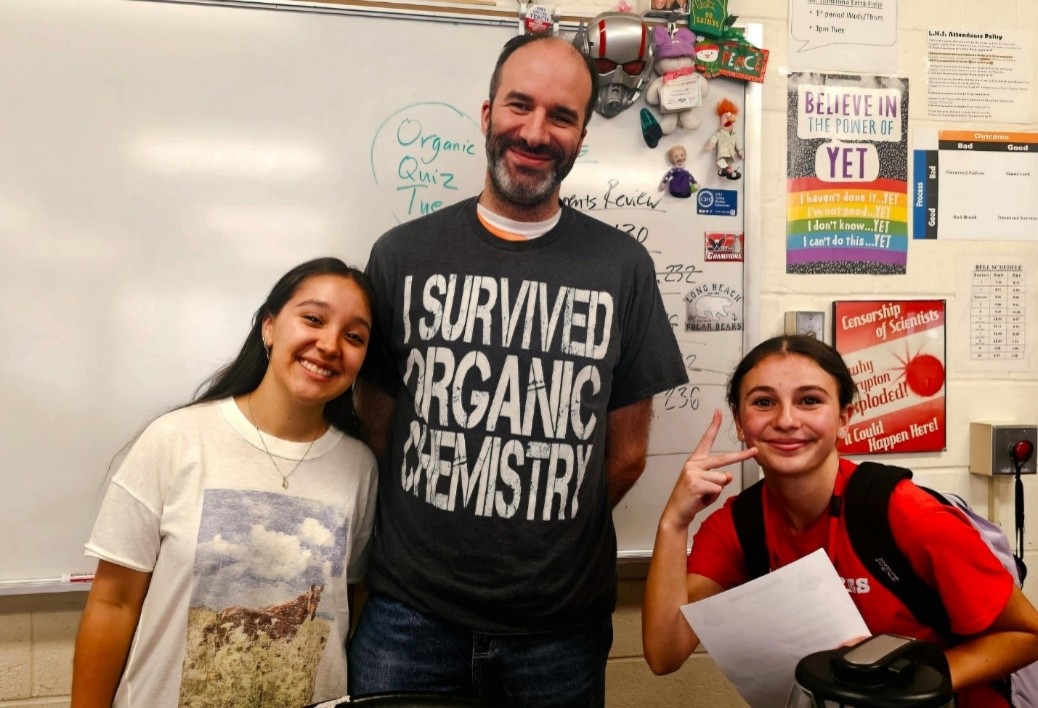
Even though this is a highly debated issue in the AI industry, not many people know about the consequences or have felt the impact yet. English teacher Karen Smith shared her opinion on the topic: “I don’t know a lot about the environmental impact of AI, but I have heard potential dangers from people regarding the topic. I think it’s an important topic to touch on, but I love AI—it is basically life changing as a teacher because things that used to take hours can now take seconds.” Smith added, “Damage to the environment because of AI is unfortunate; however, I don’t think the technology is going away any time soon. I hope people can find a solution to reduce the environmental damages so that AI can still be used daily while remaining environmentally conscious.”
Freshman Julie Shovsky noted her experiences with AI, which contrast greatly from Smith’s: “I rarely use [AI], maybe only once every few months if I missed a few days of school and don’t understand what’s going on in math.” Shovsky added, “I would not support it if the environmental impacts were any worse than they already are.” Shovsky also shared negative impacts aside from the environmental ones: “I like AI being incorporated into many scientific fields for studies, but with how it’s being used by everyone, it is really detrimental. If it is used on a day-to-day basis for basics then not only is it increasing the environmental impact, but it’s reducing the literacy and critical thinking of the common people because information isn’t actively being searched for, but at our disposal with a three second wait.”
Despite environmental drawbacks, AI also has the potential to reduce environmental damage. It can help optimize energy use by making power grids more efficient and reducing waste. Traditional AI has the potential to positively impact the planet with tools that can predict the weather, identify pollution, improve waste management, and clean up marine plastic. In addition, AI in the future could only approach higher levels if all of the following happen: usage explodes everywhere; most data centers run on coal or gas, not renewables; models keep getting much larger without efficiency gains; and there is little regulation or pressure to cut emissions. The chances of all these happening are very unlikely, it is likely that AI’s positives will far outweigh the short-term negative environmental impacts.
A software specialist who works with AI almost daily at a leading computing company shared his thoughts on the topic: “Right now, the AI [environmental] impact is fairly insignificant, mostly arising from the much increased power demands. [It’s] important to note that there are many ways AI can help improve and optimize power use and delivery as well and help create new power sources.” His response sheds light on an important aspect that most may overlook—the fact that at first glance although AI may seem to only consume natural resources, it can also have an overall better impact on the environment with tools that can predict the weather, identify pollution, improve waste management, and clean up marine plastic. When asked if he thought that AI’s environmental impact could dramatically worsen in the future, he said, “This is extremely hard to measure and predict, but like many profound changes in the way the human race operated before many major inventions (such as the fire, the wheel, the engine, the flight and space and microcosm exploration), AI will impact society in many ways. Like technologies, it’s the people who happen to misuse them, not the technology itself.” At work, the specialist has been exposed to AI environmental impact concerns countless times, and the issue is even being discussed daily. He added, “I’m the builder of AI factories on an unprecedented scale, and all the people involved in this endeavor have the same concerns and questions regarding the topic.”
In terms of issues outside the environmental impact, the specialist also believes that AI could face challenges due to fear of change creating many shapes of resistance. He thinks that people should not assume AI or its use causes enormous environmental damage, but rather think about the environmental damage that could occur without AI helping control, measure, predict, and avoid damage through curing diseases at 100x faster rate and acceleration in fields like science, research, and engineering. His biggest piece of advice for readers is this: “Most importantly, read books and decide things for yourself, without relying solely on AI.”
For the world, and students specifically, finding the balance in using AI responsibly and for educational purposes without overusing technology is going to be key as it evolves. Currently, AI does not have big environmental consequences outside of water consumption, although that could definitely change in the future.