



















In every culture, traditions are created through things like food, dance, music, and storytelling, especially around the holidays. A celebration of the New Year in Greek culture is not complete without cutting the annual βασιλόπιτα. The English translation is Vasilopita, which translates to St. Basil’s bread. Vasilopita is a special tradition that most Orthodox Greek people share. It is a sponge cake flavored with a hint of orange zest and containing a hidden lucky coin. The dish is all a Greek person needs to welcome the New Year.
A coin baked into a cake may appear a strange tradition to some. Individuals may wonder where this idea originated from, and the story may be surprising. This cake dates back to the 4th century and is associated with St. Basil the Great and St. Basil’s Day. During his time as a bishop, St. Basil the Great faced famine in Caesarea, as well as heavy taxation on coins and jewelry. The people struggled; it was agreed that this was an unfair practice. St. Basil the Great decided to take action and confront the emperor, leading him to return all the treasure back to the bishop. The bishop was unsure of whose items belonged to whom, so he created a sweet bread and baked treasure in it. As people were given their slice, they received their lost valuables. Slices were given to the poor as a way to offer charity in a concealed way. This cake is known today as vasilopita, and instead of treasures baked inside of the cake, it is just one simple quarter.
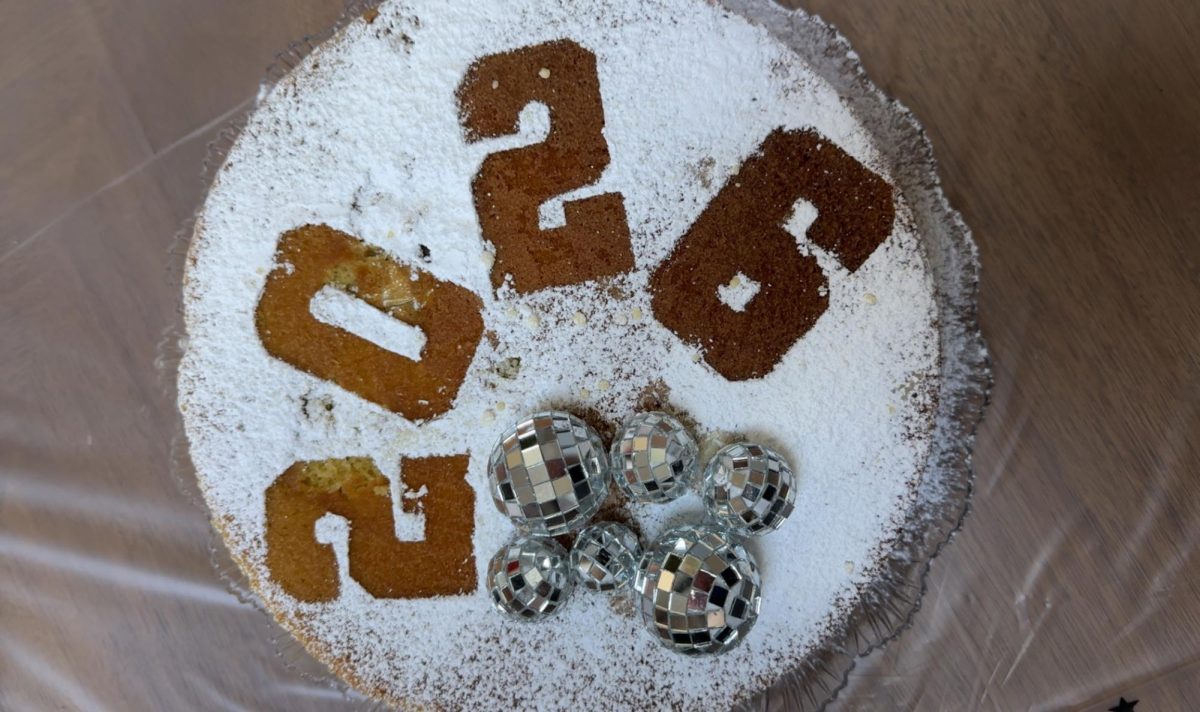
This tradition has been altered through many generations, displaying a number of variations throughout the years. The original vasilopita, created by St. Basil the Great, was made from tsoureki, a sweet Greek bread usually consumed on Greek Easter. Depending on the region and family tradition, others have changed this bread into an orange-flavored sponge cake. This cake calls for a cup of orange juice, oranges, and lemon zest to give it its unique flavor. Orange is not the only flavor to the cake. Brandy is added to enhance the moisture of the vasilopita by adding a rich and subtle warmth that complements the citrus flavors. The brandy also prevents the cake from becoming dry and creates it into the springy crumb, tender, sponge cake it is known for. A popular way to decorate vasilopita is to sprinkle powdered sugar around the cake and draw out the numbers of the new year. Forms of vasilopita have not been limited to sweet desserts, but have been created into savory meals. In some regions, this cake takes a new form via a savory pie such as meat, cheese, or pork pie.
Although there are a variety of recipes for this cake, the one constant and arguably the most important part of it is the lucky coin. This coin represents the treasures in St. Basil the Great’s original vasilopita. When cutting the cake, whoever receives the coin in his/her slice receives luck and fortune for the new year. Before each person receives a slice, slices are cut for the following: Jesus, the household or business, and the Virgin Mary. After the first three slices, family and guests receive their pieces from eldest to youngest. Slices are also cut for absent or deceased family members. Prior to officially cutting the first few pieces, the cake is blessed by drawing a cross three times with the knife through the exterior. While cutting the cake, the head of the household will repeat the prayer, “In the Name of Father, the Son, and the Holy Spirit.”
Lynbrook students and teachers have celebrated the new year with their own vasilopitas, all in their own unique ways. Sophomore Isabel Greiner expressed, “Every year, I look forward to making the vasilopita with my grandma and all my cousins. We cut it right after the ball drops and start the new year with the vasilopita. We have always made it in cake form with extra orange juice to give it more flavor. A special tradition my family has is trying to predict who will receive the coin in their piece.” Junior Gaby Gioulus said, “We celebrate the new year with vasilopita by cutting it on New Year’s Day with my whole family. The tradition is whoever finds the coin is supposed to have good luck for the whole year, which makes it really exciting. Every year, I hope I get the coin. To me, the tradition means being together with my family and starting the new year in a hopeful way. It is unique because the coin makes everyone excited, and it is something I look forward to every year.” Social studies teacher Olga Hetrick-Zisel explained, “I’ve always spent New Year’s with my mom because she’s the one who makes the vasilopita. We eat dinner on New Year’s Day, and then we will cut the cake with the coin inside. The tradition we follow is probably similar to all Greeks in the way we cut the slices. The oldest in the home does the cutting, and the first three pieces are meant for Jesus, Mary, then St. Basil. Then we cut a slice for the entire household, the poor, and, lastly, each individual family member from oldest to youngest. It was always very exciting to see which family member would get the coin, and sometimes it became a little too competitive, but it’s a very nice day that symbolizes good fortune, blessings, and the importance of helping people.”
Vasilopita is a special tradition in Orthodox culture. While most individuals are getting ready for the holidays, Greeks are buying their brandy and oranges to prepare for baking their vasilopita. Whether cutting a vasilopita is a new tradition or something you’ve done every year, spending time with loved ones makes every holiday special and meaningful. Καλή Χρόνια! (Happy New Year!)