



























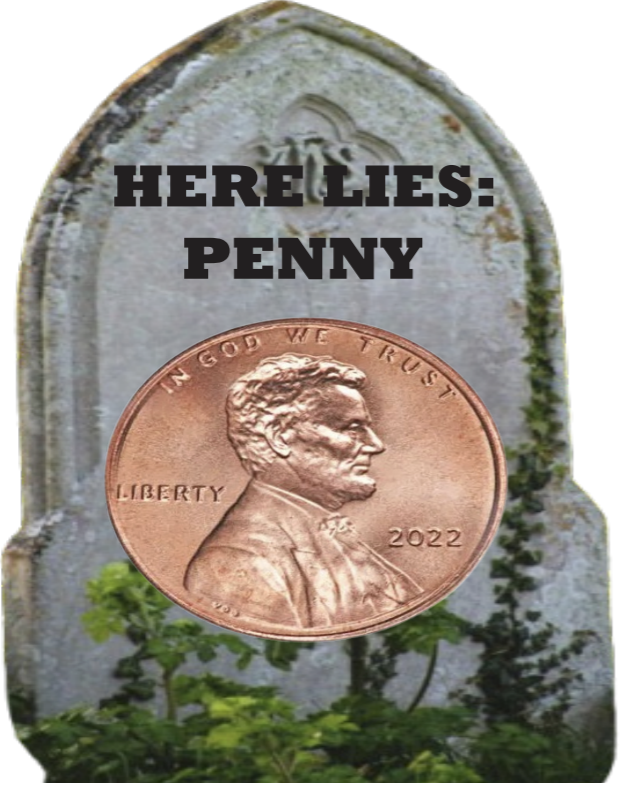
The U.S. penny, established in 1793, has been circulating in the country’s economy for over 230 years. The penny was discontinued on Nov. 12. The termination was due to heightened production costs, declining cash usage, and the agreement by the U.S. Mint to focus on more competent currency control. As of this year, pennies each cost an approximate 3.7 cents to manufacture; the price covers materials and production labor costs. Pennies are mainly composed of zinc, a material that is extremely expensive to consistently produce in today’s economy. AP Economics teacher Michael King emphasized, “It will cause a very small amount of inflation, as companies [will] round up the prices; however, it will also benefit the economy by increasing efficiency and productivity, as cashiers don’t have to waste their time dealing with pennies.”
Although this coin was utilized throughout much of American history, the country is rapidly modernizing with more efficient forms of payment through technology. Senior Kaitlin Manasakis said, “I would say it is easier to pay using a card because I don’t have to worry about the change.” Pennies have been declining in use as well, with much of the younger generation not using coins at all. “I can’t remember the last time I used a penny; I just put the coins in a bag and forget about them,” remarked junior Regan Casey.