




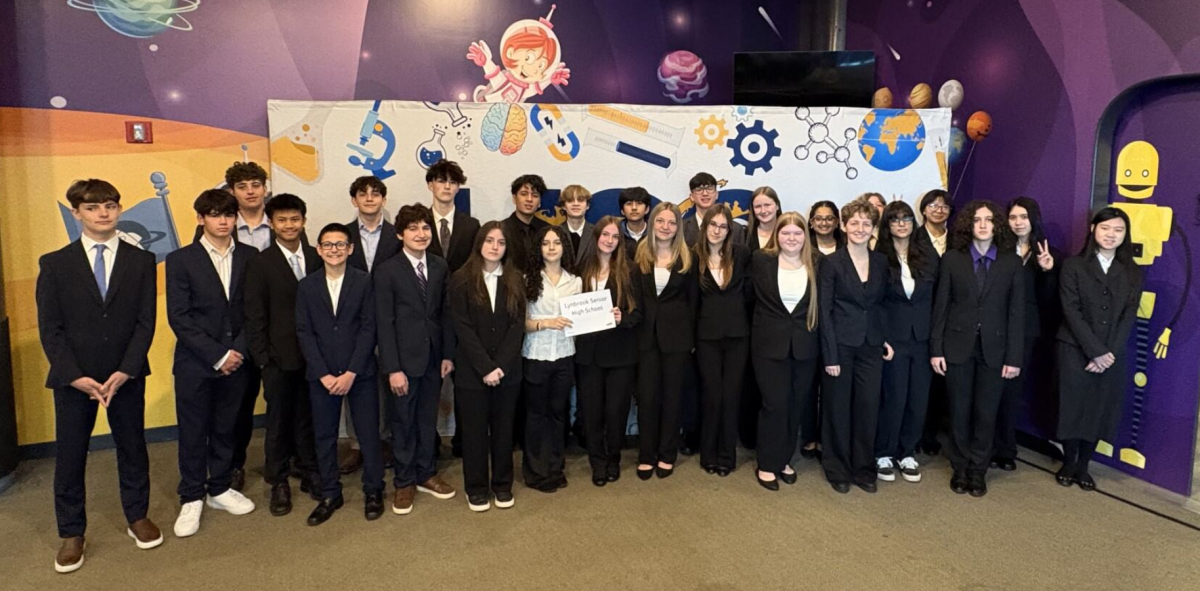






The future of STEM shined brightly when the senior science researchers took to the stage for the 25th annual Science Research Symposium on the evening of Thursday, May 29. The “Great Eight” as they have been dubbed– Erick Diaz, Katy Gottlieb, Stacey Krivitsky, Gabriella Ramirez, Eric Reilly, Kelsey Roth, Kate Santoli, and Simon Yu – presented their senior projects in front of family, friends, and underclassmen in the science research program. The event was hosted by Roth and Diaz, who helped ensure that the evening’s progression ran smoothly.
The Symposium not only highlights the accomplishments of this year’s seniors, but allows the underclassmen to share their projects and research with attendees as well. The entire night is dedicated to showcasing the talents and prestige of LHS’s science research program. The program is a four-year-long course and allows for students to conduct in-depth scientific investigations. Researchers compile their findings into presentations, which they use to compete in competitions such as Regeneron STS, Long Island Science and Engineering Fair, New York Science and Engineering Fair, Regeneron ISEF, Junior Science and Humanities Symposium, Long Island Science Congress, Kathy Belton Science Fair, and others.
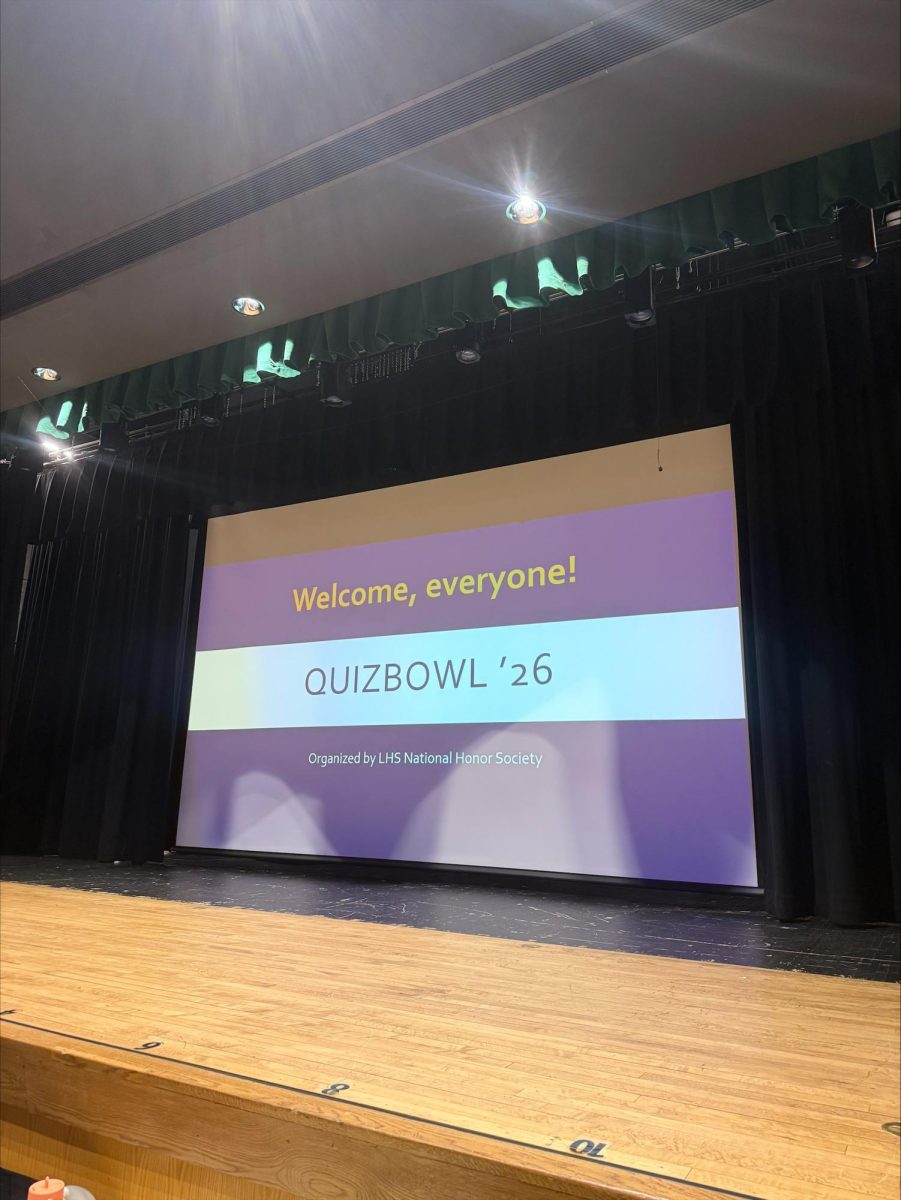
Symposium commenced in the auditorium where opening remarks were given by Roth and Diaz. The senior presentations followed after, and each senior briefly explained his/ her project and announced his/ her college commitment. “The highlight of the evening for me is always the seniors’ presentations in the auditorium. Each year, I am amazed to hear about their projects and am impressed by how confidently and professionally they are presented,” Principal Matthew Sarosy explained. For Yu, giving his presentation was a full-circle moment: “Giving my personal presentation for me was extremely satisfying as I was able to present the results of my two-year-old research project to a large audience. Being my final high school presentation, it is a moment I will cherish forever.” Yu’s presentation was entitled, “Investigating the Abundance of Ca(40) in SMSS J0313-6708: Analyzing the Nucleosynthesis Consequences of Various Astrophysical Models,” and he shared his commitment to Johns Hopkins University to study electrical engineering.
Soon after the presentations, speeches were given by science research teachers Charles Vessalico and Kathleen McAuley. “One of the highlights of the evening for me was listening to the speeches from Mrs. McAuley and Mr. Vessalico. I have known them both since my freshman year, and they have been incredibly supportive and great research teachers. Research would not be the same without them,” Krivitsky expressed. She added, “Their speeches were very heartfelt, and I will miss them a lot when I graduate.” Krivitsky’s project was entitled, “Investigating the Physical Mechanism of the Buzz Phenomenon in a Supersonic Intake,” and she announced her commitment to the Colorado School of Mines to study metallurgical and materials engineering. Vessalico could not be prouder of his seniors and only envisions successful futures for each one of them. “I know they are all going to be successful in the future. So, I hope they keep in touch, and when one of them wins a Nobel Prize, I hope they invite me to the ceremony!” he enthusiastically said. Before transitioning to the second part of the evening, the seniors presented their video montage, which included pictures that showed the science researcher throughout his/her four years in the program. This was a highlight of the evening for many, including Vessalico. “It gave the audience a glimpse of what it’s like to be in the research family,” he said.
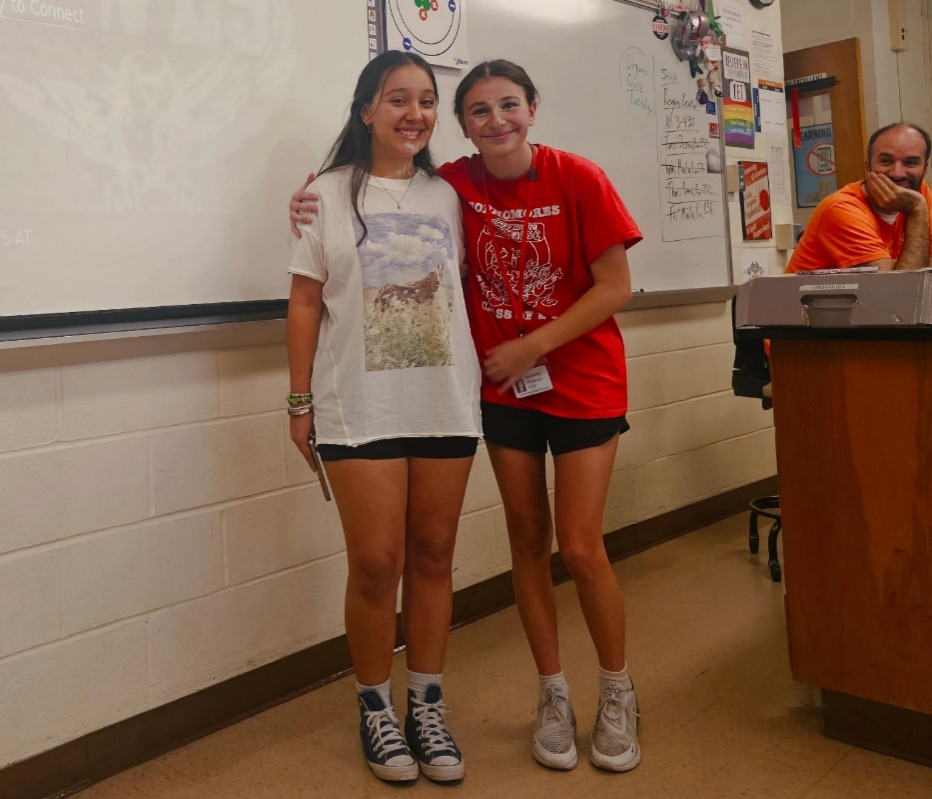
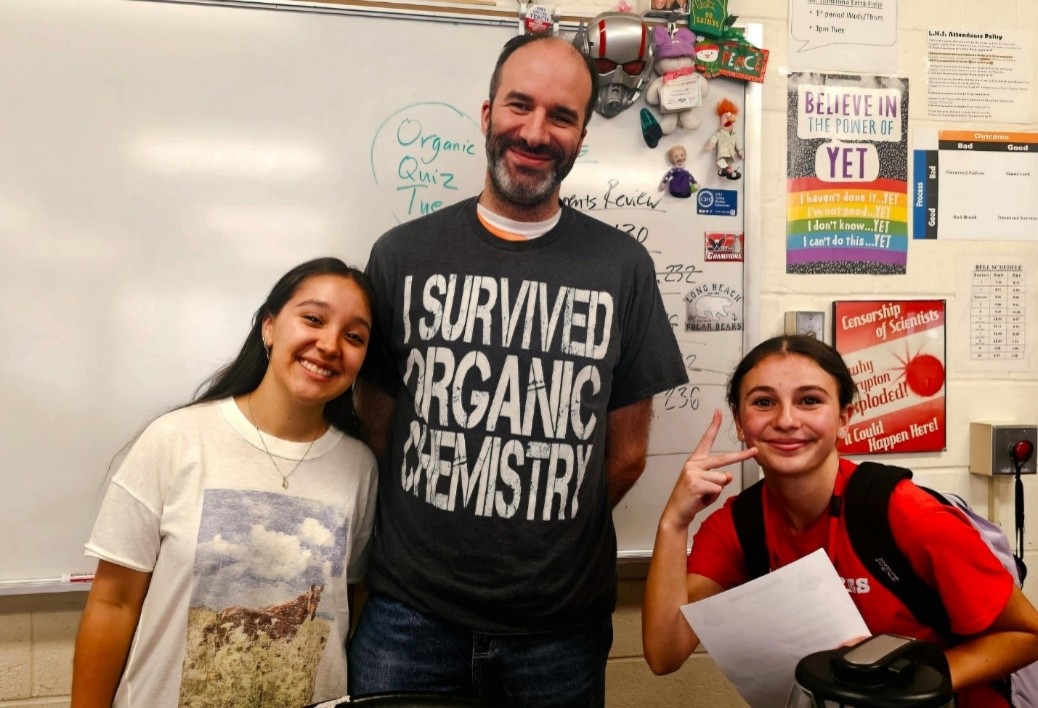
Later, all attendees were asked to head to the gymnasium to see all of the science researchers’ projects and enjoy refreshments. Freshman Kayla Rundle enjoyed learning about the different experiments students performed. “I learned a lot about what type of experiments people did and saw how much effort each person put into their project,” she explained. Rundle presented her group project entitled “The Effect of Tardigrada on the Movement Speed of Girardia Tigrina” with freshmen Sofia Calderon and Melania Stark. During this time, people could take photos or select a “lucky duck” to take home, a gift the senior science researchers chose to give to all attendees. The rubber ducks came in a little gift bag with mini science-themed erasers and a quote from either one of the senior science researchers. This time allowed for everyone to socialize right before individual student presentations began in small breakout rooms. Krivitsky explained how she went about organizing for the student presentations: “One of my main responsibilities for symposium was preparing and organizing the breakout classrooms for the underclassmen. This year, each classroom was themed around different science competitions that the researchers participate in. I coordinated the placement of underclassmen into the senior-led rooms and communicated with teachers that we will be using their classrooms.”
Once the breakout rooms concluded, that marked the end of symposium. Roth shared, “My favorite part of the evening was the auditorium session where the seniors presented their research that we spent two years on.” Roth’s senior project was entitled, “The Effect of Outflow and Turbidity on the Water Temperature, Air Quality, and Humidity in the Great South Bay of Long Island,” and she shared her commitment to Villanova University to study mechanical engineering. Yu explained how science research has been such an impactful part of his high school experience: “Personally, science research has been crucial for developing public speaking skills. Minor cues such as eliminating filler words such as ‘uhms’, keeping eye contact, and using engaging hand motions have all been techniques I have implemented into other subjects/presentations that have emerged because of science research.”
When asked what words of advice she has for the underclassmen in science research, Krivitsky shared, “I would say to really explore your interests and do not be afraid to try different fields of science; you might discover something that you really like. You will get to learn so much and that is what is most important.” Roth imparted that students should not give up on their research even when they run into setbacks. “If you ever face a challenge where you can’t collect data or the data that you receive is not what you hoped for, that’s just part of research, and know that you are making a change in science even if it is small,” said Roth. Sarosy proudly explained, “Our science research program shows that hard work and dedication still pay off in education. I am so proud of each of the students involved in the program and know they represent LHS in the most positive ways.”