




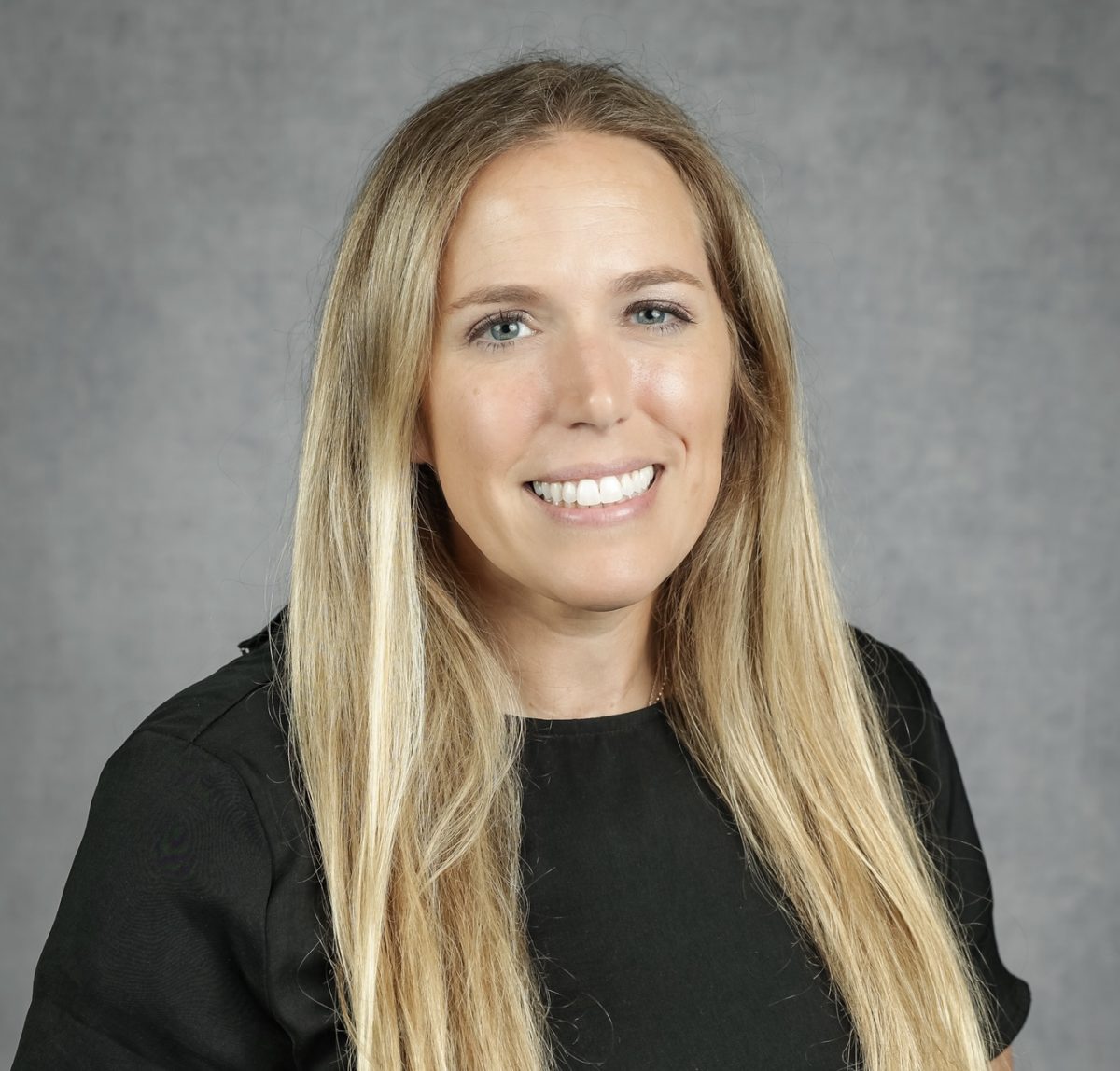



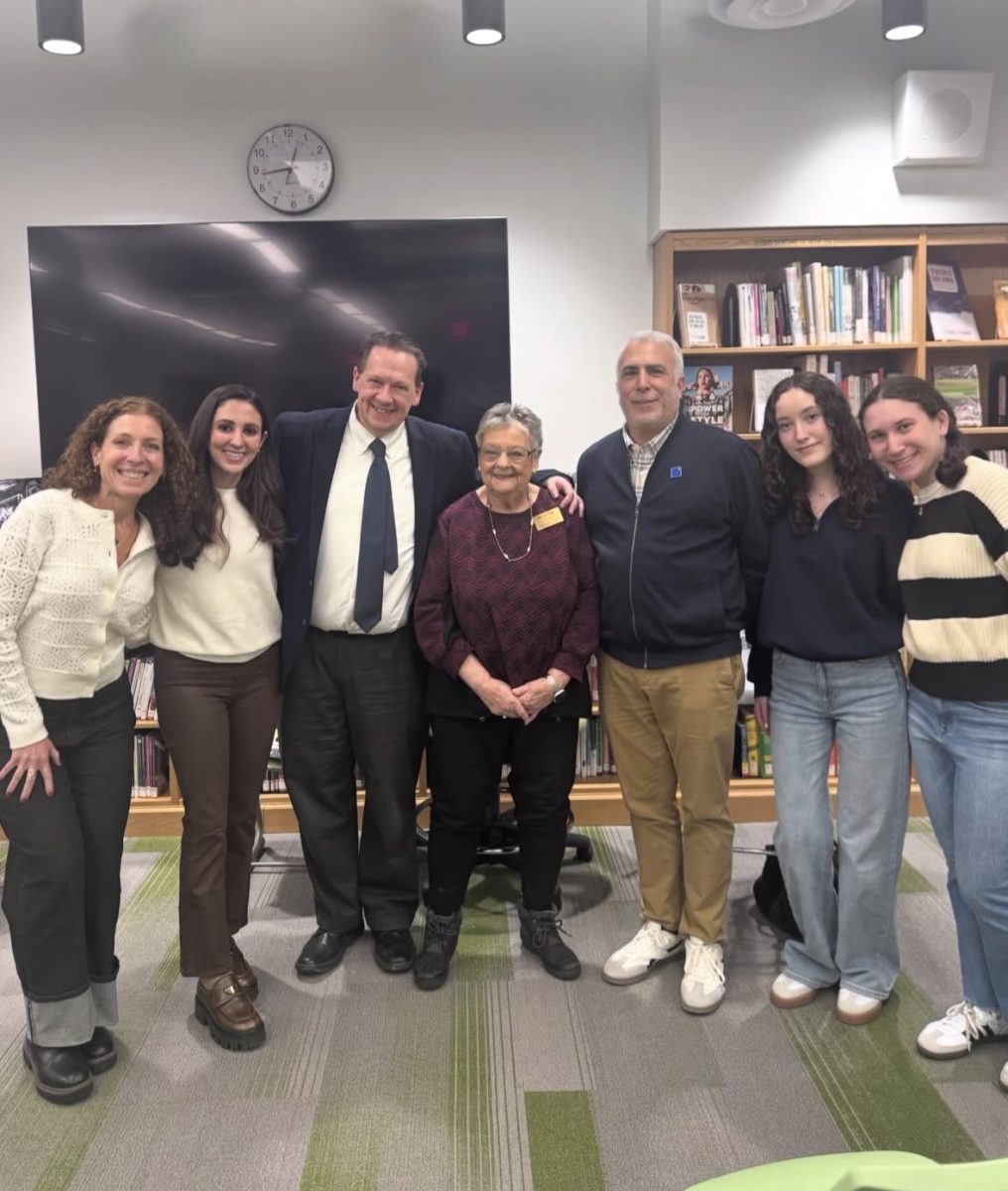
Mireille Taub came to LHS on Wednesday, Jan. 28 to share her first-hand account with students of the Holocaust as a survivor. Taub is a Jew born in France to Polish parents and who currently lives in Freeport. Taub and her family left France when war tensions were growing in the early spring of 1940. They boarded the last train that was then bombed by Germany. Taub and her family survived, and they made it to New York within two months (August 1940). Their journey consisted of trekking towards Bordeaux before crossing the Pyrenees mountains. From Spain, they traveled to Portugal where they boarded a ship to the United States.
This assembly was organized and run by the Jewish Student Union at LHS. President and junior Shannon Bludoy, Vice President and junior Zoey Garver, and faculty advisor David Rabinowitz all worked to coordinate this event along with social worker Rosanne Bogard.
Sophomores went to the auditorium during their social studies classes to listen to Taub. Rabinowitz said, “Engaging with living primary sources is vital to the preservation of history. As the number of [Holocaust] survivors continues to decline, today’s students may be the last generation to hear their voices firsthand.”
Taub and three-time Emmy-Award-winning journalist Dana Arschin, formely with Fox News and who now represents the Holocaust Memorial and Tolerance Center of Nassau County, both discussed why it is important for survivors to tell their stories and for students to continue to learn about the Holocaust. Taub expressed, “It is important to learn from the past. Not only because we do not want to repeat the past, but because inevitably, we sometimes do. But because it is a way of connecting the past with our present, who we are, and into the future for future generations. It is important to talk about the past.” Arschin responded, “We must remember — not just as a historical fact, but as a moral responsibility. ‘Never forget’ means keeping the stories, the names, and the humanity of the victims alive, especially now as survivor voices are growing fewer. Memory and education protect us from repeating the same patterns. The Holocaust shows us how ordinary people can become complicit in extraordinary evil. It did not start with gas chambers; it began much earlier with words: propaganda, scapegoating, labeling entire groups as threats or subhuman, stripping away rights step by step. That slow process of dehumanization is a warning sign we see in many societies today, whether it is antisemitism, racism, xenophobia, or any form of ‘us versus them’ thinking that treats certain people as less deserving of dignity.”
A lesson from the Holocaust that is still seen in today’s society is the bystanders, those who stand by and watch atrocities happen. There are two types of people: people who stand up for what is right, and people who ignore the problem. Not everyone understands the importance of being independent and thinking for oneself instead of following the pack. Taub spoke about her husband who survived the Holocaust because of a family who hid him and kept him safe. She discussed how people who turn a blind eye are worse than evil itself. Just because something is not directly one’s problem does not mean he/she should ignore it. Arschin, granddaughter of a Holocaust survivor, added, “Another lesson from the Holocaust is the danger of indifference and silence. Many perpetrators were enabled not only by active hatred, but by the inaction of bystanders— people who knew something was wrong but chose not to speak, not to help, not to risk anything. The opposite of that is the choice to become an upstander: to question harmful ideas, to stand up for others, to use your voice when someone is being targeted or demeaned, even when it is uncomfortable or unpopular.”