





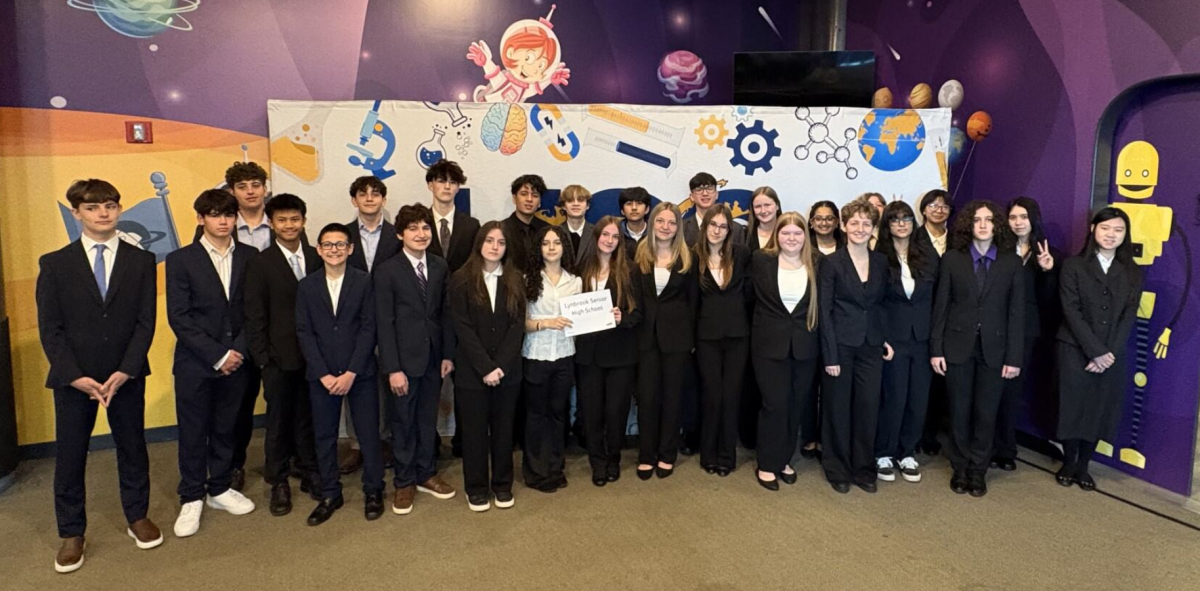



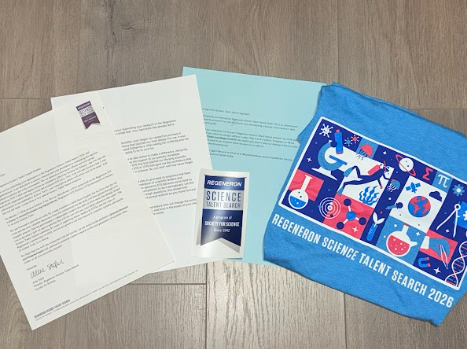
This fall, 13 members of the senior class – Devin Byrne, Dilnoor Nijjar, Leah Pisano; Brandon Haviken, Joaquin Martin, Naseer Gaffoor, Cathlyne Cueto, Ella Carroll, Elin Kim, Colin Linzer, Jaime Pereira, Aidan Michaels, and Sami Mohammed (in order of submission) – stepped into one of the most competitive academic arenas in the country: the Regeneron Science Talent Search (Regeneron STS). Often called the “Super Bowl of high school science”, the national research competition draws thousands of submissions each year, with only a small fraction advancing to semifinalist or finalist status. For the seniors who submitted their work, the process has been in the making for months, including the summer break.
While each of the 13 seniors pursued a different topic, their projects share a common thread: independence. Whether analyzing biological systems, coding predictive models, or investigating environmental or medical issues, these researchers spent countless hours collecting data, troubleshooting experiments, and revising their work. Haviken commented, “It was interesting to read everyone’s papers while peer editing. Seeing that my topic was so different from my classmates was an exciting experience.”
Known for its rigor, Regeneron STS asks students to design and conduct an original, college-level research project, write an extensive research report, and reflect on the scientific process through essays. For many of LHS’s researchers, that journey began long before the deadline. Pisano mentioned, “The Regeneron process was stressful in terms of the amount of work and the deadlines. However, it was really satisfying to submit and look back at the hard work it took for us to get there.”
Now, with applications submitted and results on the horizon, all 13 seniors are taking a well-earned breather. Still, many admit that waiting might be the hardest part. Martin expressed, “It honestly feels cathartic to finally submit. Most of my days have been spent on Regeneron, so it feels kind of weird to have a huge chuck of my day be free now. It’s a good change though.” Semifinalists will be announced in January, followed by finalists later in the spring.
Regardless of the outcome, the applicants recognize the significance of what they have already accomplished. Tackling a project of this scale on top of schoolwork, college applications, and extracurriculars demonstrates a level of discipline and passion not easily captured by a transcript.
As the school community awaits the results, the researchers are still not done with their work. They have several competitions to attend and aim for the next big thing: the International Science and Engineering Fair (ISEF). Pisano said, “I am looking forward to attending the Long Island Science & Engineering Fair (LISEF) and New York State Science and Engineering Fair (NYSSEF) and presenting my poster to judges.” These two competitions are the qualifying doors to ISEF. Whether they go on to become scientists, engineers, physicians, writers, or something entirely unexpected, their willingness to ask questions and explore the unknown sets a powerful example for future researchers in the years to come.