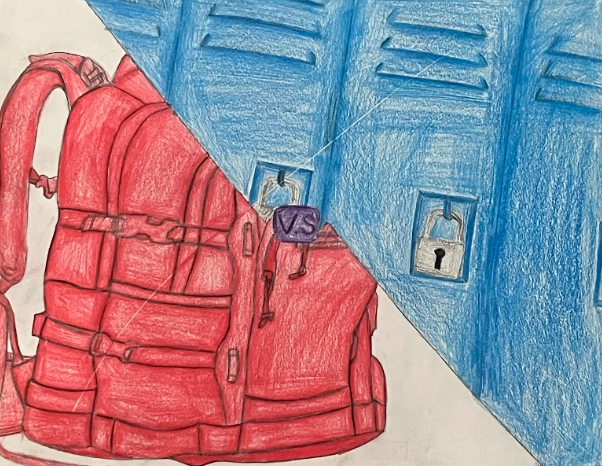

























“We see it. We hear it. We’ll take it.” Those are the words written on posters in classrooms to prevent distraction and give consequences to those who choose to divert their attention from learning to their Instagram, Clash Royale, or Snapchat. I am not any different; I do tend to be very distracted, but I understand that a little scroll on YouTube Shorts will only give me temporary pleasure. I could always do it later, but the impulse is uncontrollable.
The phone policy, however, will prove to be beneficial as time passes, and it has already shown signs that it will be successful. “In my opinion, this new phone policy has many pros but also has many drawbacks. Some pros are that there may be fewer distractions, fewer disruptions, and less cheating. Some cons are that communication between parents and students will be harder if there is an emergency,” said sophomore Warren Zhang. He added, “I believe that phones can allow students to self-teach themselves if they missed something in class. I also believe that enforcing a no-phone rule is extremely difficult since many students will want to break the rules.” The bell-to-bell policy of no phones can be very beneficial to students in terms of focus in class and attentiveness, but it can be difficult in emergency situations.
The phone ban can also be vital for students’ learning and social interactions. Phone usage is also an addiction, and the new phone policy will help reduce this. Principal Matthew Sarosy commented, “I believe the new phone policy will benefit current and future students at LHS. From the feedback I’ve received, students feel less distracted, and there is less pressure to check their phones if all students are unable to communicate that way during the school day. I’m very interested in continuing to hear from students about their experiences with this change.” Sarosy is constantly communicating with students and faculty, so he understands how the policy impacts everyone. When the phone is next to a person and it constantly vibrates or lights up when a notification appears, it becomes distracting and does not allow for students to completely focus on the task at hand.
One of the main reasons behind the new phone policy is the distractions caused by cellphone use in class. Teachers are far more than just providers of information—they are fundamental to shaping who we become. They challenge us to think critically, encourage us to become better people, and help us understand not only the mechanics of the world, but also our place within it. Their influence extends well beyond textbooks: teachers guide us through historical events, ethical dilemmas, and the complexities of modern life. Without their dedication and guidance, students would miss out on the opportunity to truly engage with learning and to develop into thoughtful, responsible individuals. Due to this, it is crucial that students give their full attention every day during the 40 minutes they spend with each teacher. Social studies teacher Nicole DiBenedetto hopes the new policy will result in more focused students. She has implemented additional measures to boost attentiveness, such as limiting tablet use in class on most days. According to DiBenedetto, she has noticed a significant improvement in student engagement with each other, with her, and with the course material. She also notes that it has been a challenging adjustment for students, especially those who have been accustomed to a prolonged period of unrestricted phone use. DiBenedetto believes that when not being on phones during the day becomes a habit, students may grow to appreciate time spent away from their devices.
Overall, the new phone policy passed by New York Governor Kathy Hochul has already increased students’ focus and attentiveness and decreased levels of distraction. While it may take time for everyone to adapt, I am confident that its benefits will become even more significant as time goes on. In fact, I believe that, looking back in the future, we will recognize this policy as a turning point that allowed students to reclaim their attention, develop healthier habits, and engage more deeply in their education. Though the adjustment may be challenging now, I am optimistic that the positive impact on our learning environment and personal growth will only become clearer with time.