










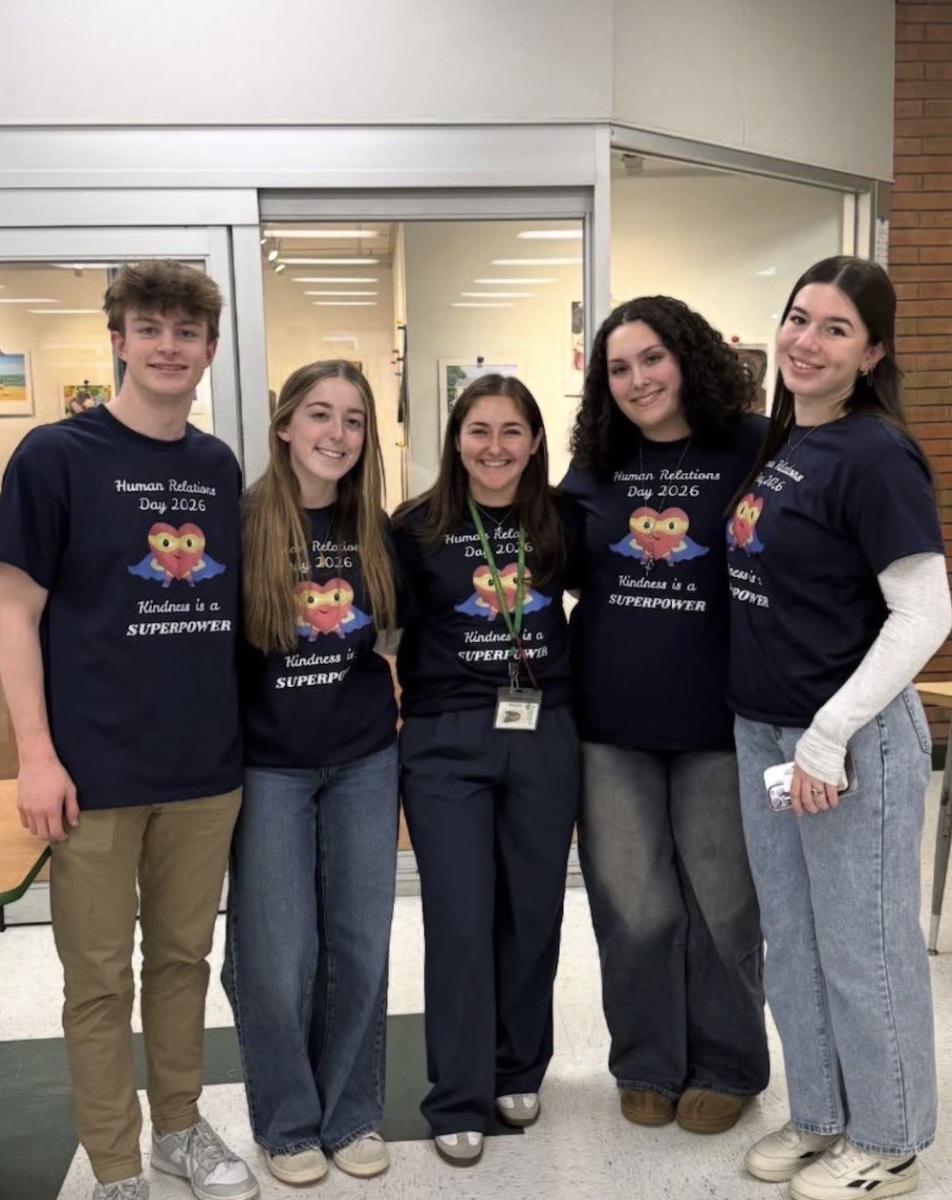










For students at LHS, earning 15 volunteer hours is required for graduation. Earning volunteer hours has always been something that can be done through an after-school club throughout the school year. During the summer, there are places in the community that also provide volunteer opportunities, such as the Lynbrook Public Library. However, not all students can arrange free time to volunteer after school or during the summer. Offering time during the school day to complete these hours may be the answer.
The best times to complete hours over the course of the school day could be during off periods and lunch. In fact, Principal Matthew Sarosy spoke about volunteering during school hours: “I support such efforts as long as students do so on a free period.” This would make free periods an open option. If volunteering during school was possible, students could go online or to the main office to schedule a time for volunteering. Senior Maha Ajmal commented, “I’d like to see opportunities such as teacher assistance, school-event preparations, or tutoring younger students.” Meanwhile, sophomore Melania Stark said she would like to see “volunteer opportunities about baking or cooking, since [she enjoys] doing those things.” With considering the hobbies and interests of students, there could be a wide variety of volunteer opportunities devised by students, teachers, and staff.
Volunteering during school hours could positively affect students who need help reaching the minimum number of hours or who are aiming for 200 hours, which would be recognized at gradutation. Ajmal explained how such a program could benefit students: “I wouldn’t need to spend extra hours outside of school volunteering or go looking for volunteering opportunities on my own.” This would help many students who are busy with after-school sports and/or juggling personal matters.
Debbi Ibana, a former teacher’s aid at North Middle School, said that she believes students would benefit by learning new skills that come with volunteering. Ibana added, “It’s good preparation for a real job.” She also said one of the skills students could possibly gain includes time management, and that this “would give students the kind of responsibility that they would need.”
While volunteering during school hours could benefit countless students, it may also have consequences. Not all students have the ability to do volunteer work during the day. Some students have many free periods, while others have none. According to guidance counselor Matthew Renz, “The challenge would be the equity.” Having a clear division between students who can and cannot have the opportunity to volunteer would be a major problem. This fact would also bring a lot of pressure to guidance counselors like Renz, who mentioned, “It would be a challenge schedule-wise.”
Some schools around the United States do offer volunteer opportunities for students during the school day. The Hudson School in upper New York has a community service program embedded in the curriculum. The school requires students to complete a minimum of 20 hours annually. Students are given the options for tutoring, fundraising, and organizing food/coat drives. The Mary Institute and Saint Louis Country Day School (MICDS) in St. Louis, Missouri, offers a similar program. Students are allowed to do volunteer work such as peer tutoring and assisting in classrooms during their free periods. These students are required to complete around 45 hours of service over four years. Considering the two volunteering systems that both schools have, could LHS develop a system like one of the schools, or take its own unique path?
All students are required to do 15 hours of volunteering, while some aim for the 200 hours that would grant them recognition at graduation. LHS should consider and discuss if the benefits outweigh any drawbacks of adding a volunteering program during the school day.